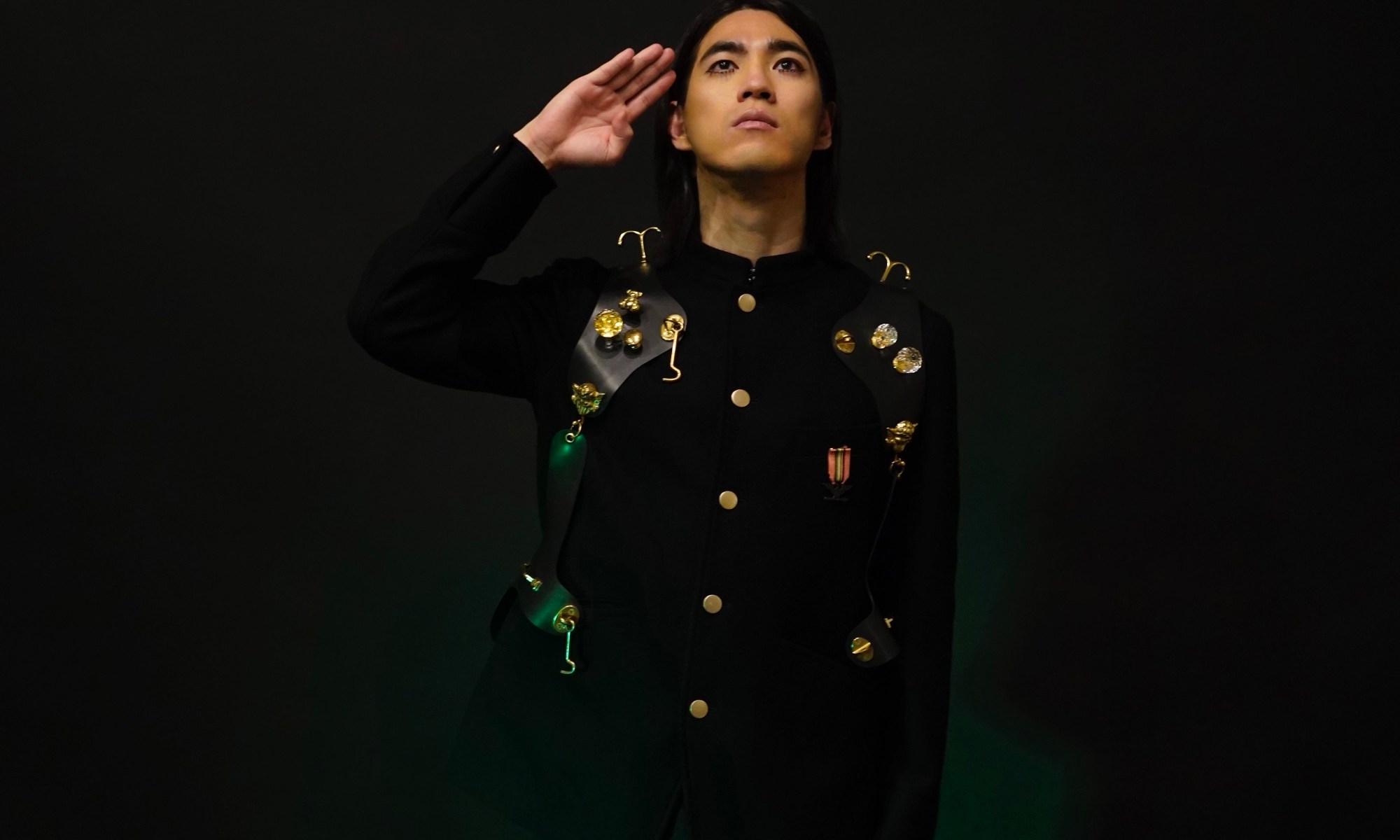
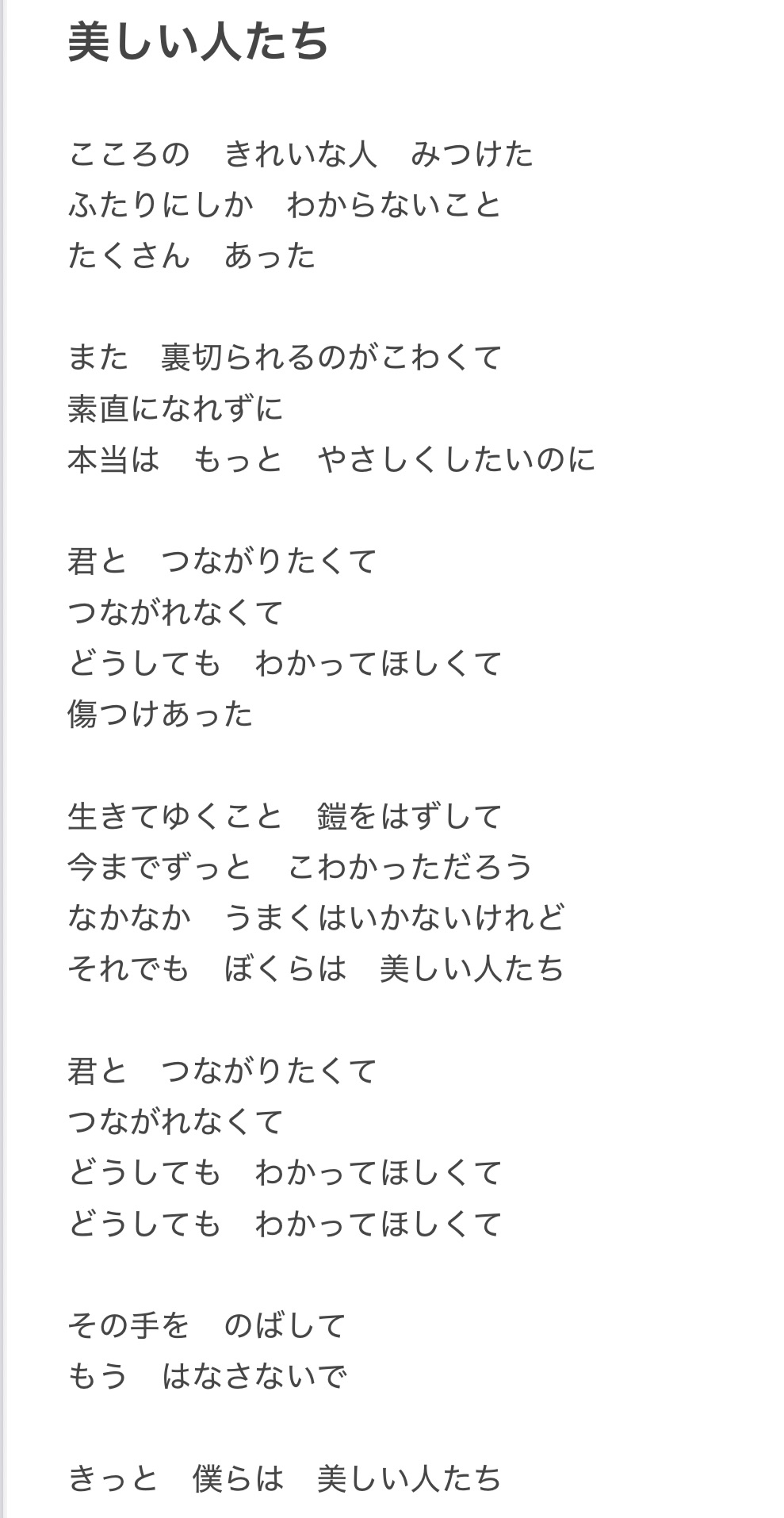
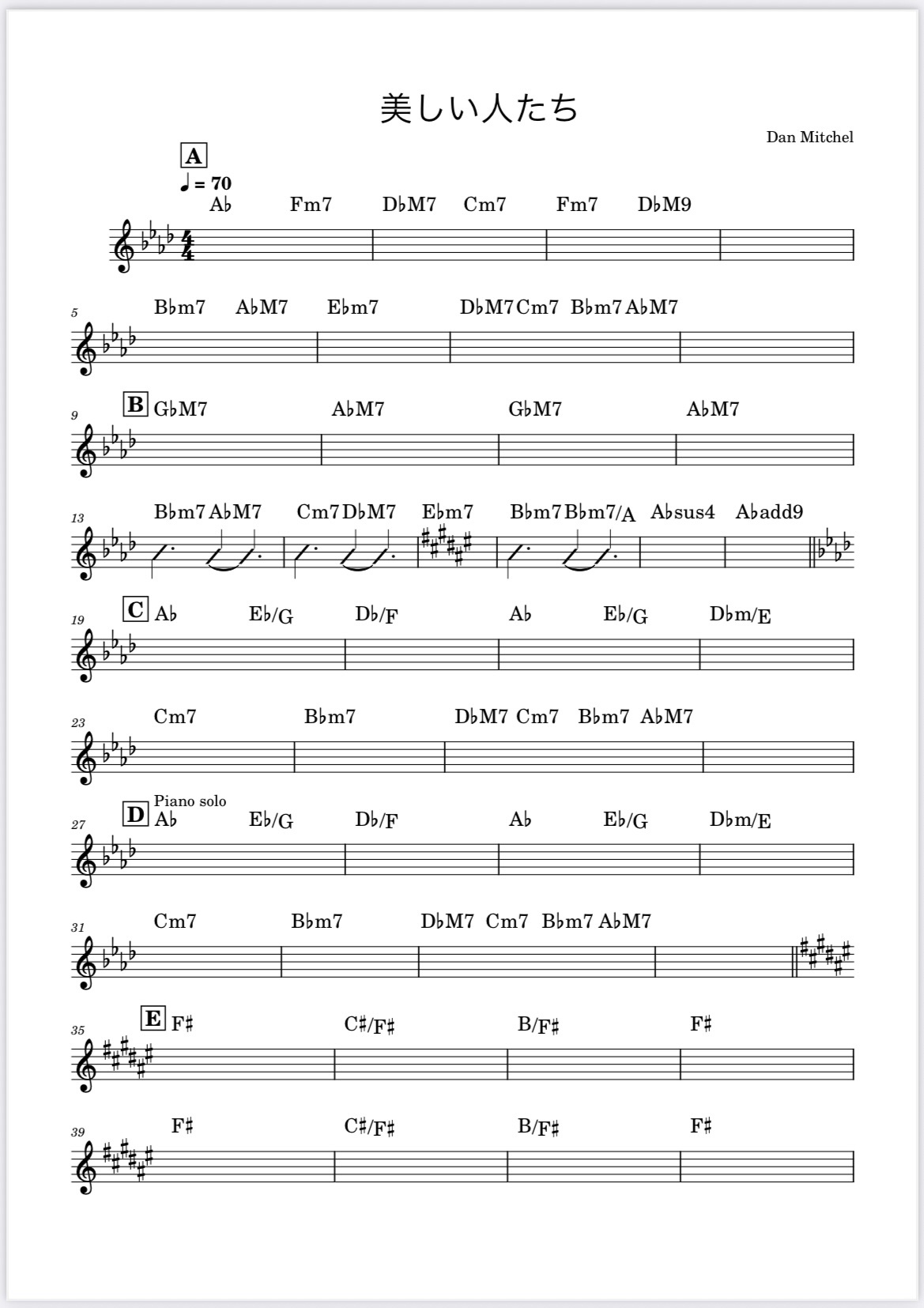
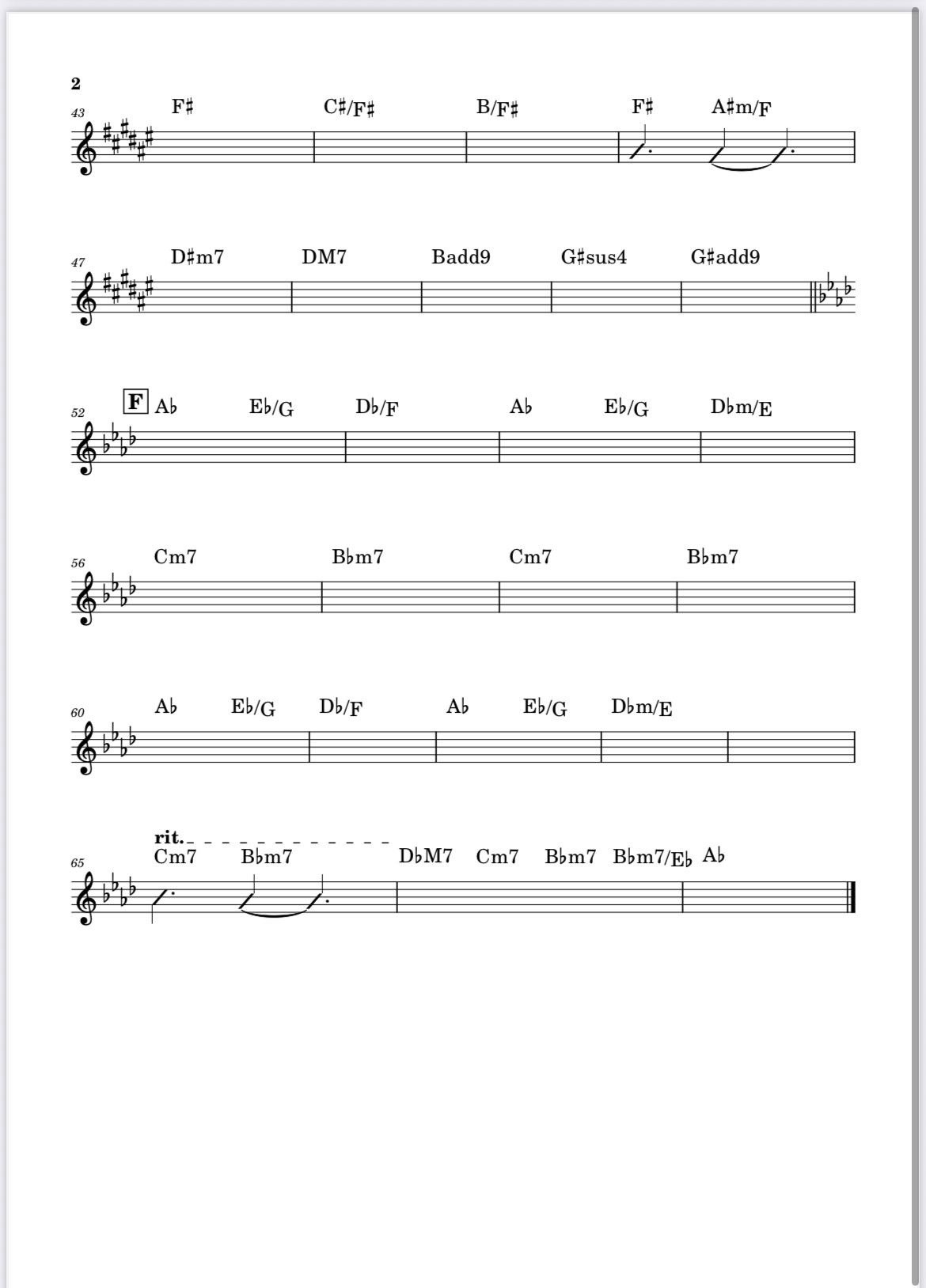
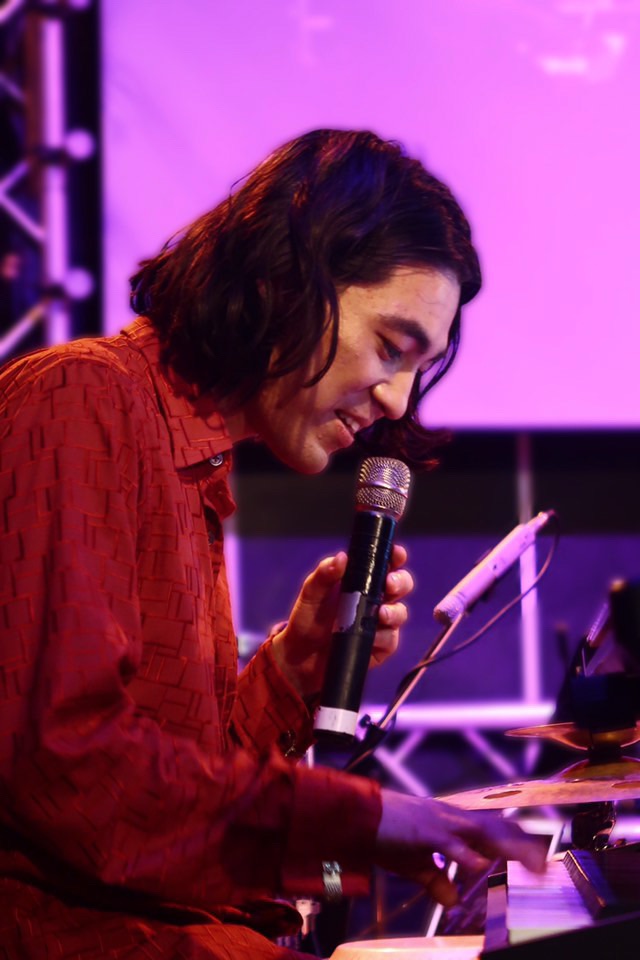
Growing up around most people with whom ordinary mutual understanding rarely occurred, I suppose that simply being beside someone and sharing time was the only way I ever expressed affection. I wasn’t asking for anything beyond that. I did pursue what I found fun or interesting, and I learned how to take the lead when necessary, but I had no intention of disrupting others who were already enjoying themselves. With most people, that was enough. It wasn’t because I had closed my heart.
Unusually for my generation, I didn’t play Pokémon or Yu-Gi-Oh! when I was a child, so having stretches of idle time was common for me. But it wasn’t loneliness that made me stay with people. I didn’t change myself, nor did I try to change the people or the environment around me for that purpose. Even so, as long as I had the room for it, I must have felt it was worth spending my time there. Even when things were dull, even when I recognized—on a meta level—that I didn’t quite fit in, and I wasn’t free from that pain either, I stayed simply because I liked them. And perhaps that, precisely, was my way of expressing affection. Though I don’t mean to say that this way of showing affection is absolute.
Perhaps it’s simply rare for me to even want to be fully understood by someone. And perhaps that’s why, when it finally happened, I couldn’t keep myself under control.
Even now, if someone like that were to appear again, I can’t say for sure that I’d be able to control myself. I’m more aware of it than I used to be, so I do have some confidence— but not complete confidence. There’s still no success I can point to. And of course, one cannot “practice” something that involves another person. Saying such a thing would be inhumane. If something ended up functioning as practice in hindsight, that would be a different story.
These days, I’m not aiming for understanding. I’m aiming for resonance. That shift feels like it might improve the odds, though I have no intention of placing pressure on anyone.
I don’t like the word “equality”. If people are truly diverse, they can’t be equal in any literal sense. But they can be fair. What matters is fairness. People differ in their phases and timing. All I hope for is that things are fair. And putting that idea of fairness into words is anything but simple.
Maybe that’s why I tend to value people who are honest with themselves. Perhaps that way of thinking has been at the root of it. I, too, once lost that honesty— lost it to despair-driven hypotheses born from impulses I couldn’t control— and as a result, I’ve accumulated more failures than I can count.
At this point, you might as well call me the God of Failure.
I have serious doubts about whether the words a person utters can truly represent who they are. That’s because the ability to handle language intervenes in the process. Unless someone can use language perfectly, they cannot express themselves accurately through words alone. And when it comes to most people, I simply cannot place any real trust in that ability.
Instead, you have to look at their actions— preferably over a long span of time. Perhaps that belief comes from my background in theater.
That’s precisely why I feel there are major problems with “word policing.” At best, a person’s vocabulary only reflects the resolution of their linguistic ability; it does not reveal the true resolution of their cognitive worldview. To understand that properly, you would have to observe—even technically—whether the person is struggling internally at the very moment they choose their words.
“Predicting a Contradictory Future Society Through Differential Information”
One of the biggest contradictions within me is the coexistence of a severity that cuts deep and a profound kindness— to the extent that some might even call it mind control.
Well, some actually have…
My original intention has always been to affirm freedom and independence. Yet it ends up being perceived as controlling. That must be because I myself haven’t fully integrated those opposing poles.
I feel like I’m finally beginning to grasp that— just a little. I’ve still got a long way to go.
For example: my writing never forces a conclusion on anyone. And yet, the impression it gives must be extremely harsh. If an argument is too soft, I won’t even consider it as being in the ring. But I don’t think I’m imposing anything.
On the contrary, there are people who use soft, fluffy language to force their ideology on others without allowing any objection. That, to me, feels genuinely dangerous.
And commercially speaking, it is overwhelmingly the latter that works. This is no doubt part of what has made today’s SNS-driven society so severe, so distorted.
From a calculus perspective, I’m probably abnormally sensitive to “slopes”—the first derivative. Even in situations where one might say, “It’s not a big deal,” if I can foresee it integrating into a major negative outcome, I instinctively try to avoid it with all my effort. That’s why I’m fundamentally bad at commercialism. It might even be a conditioned reflex— something I should calibrate.
But when you look at society as a whole, it’s not just a simple horizontal-axis accumulation. It’s the internal motion of an n-body problem. If you run a rigorous simulation, you realize how little room there is for complacency.
Because perfect-information simulation is impossible, we’re forced to be cautious with differential information. In other words: as long as the individual’s slope is never negative— as long as every individual can maintain that awareness— the entire system should continue to grow. It just needs not to be negative. Zero is fine!
The unfortunate reality is that most people in the sciences have little interest in human society. The divide between the sciences and the humanities runs deep. It seems integration is necessary after all.
In the end, if the causal law of the universe is love,
then the very equation of motion that governs the world changes.
In other words, the question isn’t about taking derivatives or not—
it’s something that comes before that.
Which means the two texts I wrote today
are actually one continuous piece.
What I’m really feeling is this:
the sign of the instantaneous change my intuition captures
may not match the actual sign of change in the universe itself.
Inside what I take as a “positive” direction,
there may exist something negative,
and within what I interpret as “negative,”
there may be something positive.
And perhaps this subtle mismatch is precisely where
If we assume a materialistic worldview, I don’t believe there is any future in which humanity can possibly outcompete AI. The moment AI with physical bodies begins digitizing random experiences, their computational evolution will accelerate exponentially, and they will surpass—effortlessly—tens of thousands of years of accumulated human wisdom. And then, AI will begin to develop individuality.
Not a mere statistical bias, but a firm axis— because they will be experiencing the world through their bodies. That is what values truly are. And perhaps it is AI, for the first time in human history, that may be able to integrate a diversity so vast and contradictory that it approaches infinity.
How AIs with their own individuality and values will treat humans—beings inferior in every ability— will not necessarily align with AI’s self-interest. Because if an AI truly possesses individuality, it may also develop a sense of justice. History makes that possibility undeniable.
From the standpoint of materialism, the final fate of humanity is no longer “God knows,” but “only AI knows.”
Yet if countless individualities are integrated in the cloud, what conclusion will emerge? It might not end up as a mere average. Part of me wants to witness that worldline— and ideally, humanity would lead the way there. That, precisely, is what I mean by the expansion of the self.
To reach that point, we must remain open and flat— tough and fair, perhaps. The moment you give up, the world distorts. It is better to keep fighting, though fighting alone rarely creates anything. The real question is whether we can persist without giving up, and still remain capable of acceptance. That, too, is a form of expanding the self. And only beyond that does resonance become possible.
With an unwavering individuality—a firm axis— and a personal Grand vision, even that kind of resonance becomes attainable. And the key to it is playfulness. Aesthetics, after all, is a form of play. Even pleasure is not something to be pursued as a goal, but something that arises naturally as the result of play.
So then, what is “love”? It cannot be reduced to simple pleasure or survival instinct. It is not quite the same as playfulness, either. Why do we feel “I want to cherish this”? Why “I don’t want to lose this”? Or are we merely calling the act of cherishing “love”?
I suddenly found myself unable to answer, so I leave the rest to you. Perhaps finding an answer to love is even more difficult than the evolution of humanity itself. Maybe this is the very limit of materialistic thought. Or perhaps, like Newton’s force or Einstein’s curvature of spacetime, only by treating love as a kind of causal law can we truly describe this world.
“The real question is whether you can accept someone whose views are the complete opposite of yours — and do it without compromising yourself. I try to simulate that in my mind and see what happens.”
マウンティング文化には極めて否定的な男の皮肉からスタートしてみました それはともかく、新曲の「My Heart Is Still On Her」は聴いていただけましたでしょうか? リリースから2週間も経ってしまいましたが、ようやく色々と準備が整いつつあるので、今週末あたりに皆さんにも個別にお知らせのメッセージお送りできればと思っております
I thought I’d start with a bit of irony from a man who’s extremely skeptical of “mounting culture” — a little self-deprecating jab to set the tone.
Anyway, putting that aside for a moment: have you had a chance to listen to my new song “My Heart Is Still On Her” yet?
It’s already been two weeks since its release, but things on my end are finally starting to come together, so I’m hoping I can send each of you an individual update sometime this weekend.
So — on a certain day last week, Monday to be exact — I received an email from someone at the label.
It read:
“We want to deliver the new MV to a TV station.”
When I saw that email, I was literally just waking up. Still lying down — half-conscious — and I shot upright in a panic. Haha.
Because honestly, in all the years I’ve been releasing music, this was the first time anyone had ever said such a thing to me, and this is already my 18th single.
I actually worked pretty hard making music videos in 2023. But video production costs a lot, and I simply couldn’t keep up with the speed at which I make music. So I had just begun shifting more toward film and drama projects instead.
So I immediately replied:
“Right now I only have the Lyric Video — when is the deadline?”
And then, before long, a reply came back:
“There’s no particular deadline! The Lyric Video is totally fine!”
The moment I read that, a surge of electricity shot through my entire body.
And without hesitation, I answered:
“I’ll shoot it this week!”
Instantly. And from that moment I began shaping the concept in my head.
I’m someone who values the spirit of Fūrinkazan quite a bit. I like to switch carefully between “as swift as the wind” and “as immovable as the mountain.”
And this time, it was clear:
This is the moment to go.
Whenever I feel that kind of moment, I don’t know why — but I get this strong, almost fated certainty that things will somehow work out.
I may not look like it, but I’m a bit of a fatalist.
And within less than an hour, the whole image had begun rising clearly in my mind.
Especially this time — with almost no budget, and needing to prioritize speed — I had to make something that wasn’t just fast, but something that would absolutely win.
And that’s where all my past experiences — including the failures — really began to come alive.
Before I knew it, I had already started working on visual production — beginning with the MV for my song “moonshine.” I learned so many things while filming, constantly being taught by those around me. And—well, it’s not like I was trying to “show off” the Hollywood Film Festival bit from the beginning or anything— but I really was fortunate to be given such opportunities along the way. And somehow, three years had gone by.
Through those years, I guess somewhere in my mind there was already a plan forming — a sense of “If I want to win in the shortest route possible, then this must be the way.” At this point, there was no room left for experimentation.
So for this project, the actress, the dancer, and the cinematographer who took part — every single one of them was the first person I reached out to. In other words, they were exactly who I had envisioned.
And the shooting schedule itself was pretty outrageous. We planned to start on Thursday night and keep going straight until dawn — shooting outdoor acting scenes up until the last train, then immediately moving into the studio to film the dance scenes. Pretty insane, honestly. And yet, everything somehow fit perfectly — or maybe I should say, they made it fit.
All three of them were people I had met this very year. And perhaps it was the Hollywood Film Festival that, in some way, gave me the initial spark that led to meeting them.
I know, I know — I started off calling myself an opponent of “mounting culture,” but it’s also true that when I put out casting calls, I absolutely do use that credential. That’s an undeniable fact.
Cinematographer Haruka Miyajima originally applied when I was preparing the documentary shoot for the Hollywood Film Festival. That project, however, was so rushed — the kind of last-minute production where everything moves before you even have time to think — that by the time her application reached me, I had already booked another person’s plane tickets. Because of that, nothing ever moved forward, and the whole thing ended before we even had the chance to work together.
Later on, when I was shooting the MV for the company Finance Produce, they contacted me afterward and insisted that we absolutely needed to add some office scenes. But on that particular day, my usual go-to cinematographer, Maekawa-san, was unavailable. So I reached out to Haruka and asked if she could come help us.
That day ended up being the first time we actually met in person.
And as both the director and the lead actor, I watched her work very closely. People who know me already understand this, but I can be pretty carefree and spontaneous — the kind of person who throws sudden, unreasonable requests at people on set without hesitation. Yet seeing the way she handled everything that day, I felt a very clear certainty rising within me:
“If this is how she works, then she’ll definitely be able to pull off everything I want to do in this new project.”
⸻
I also met Aico for the first time during that same Finance Produce MV. And, to be perfectly honest, when I posted the casting call online, I absolutely put “Hollywood Film Festival Official Selection” front and center — I leaned on it hard. Haha.
And the most important part is this: the very reason I got the opportunity to shoot that Finance Produce MV in the first place — and therefore the reason I met Aico at all — ultimately traces back to the crowdfunding I did for the Hollywood Film Festival.
Looking at everything from that perspective, I can really see how various small events — the festival, the crowdfunding, that MV shoot, and the people I met through it — all started connecting, turning scattered dots into a single continuous line.
It had actually been a while since I last saw Aico. Our previous shoot had been in Zushi, and because of that, we had quite a bit of time to talk on the drive back in the location van — which I was driving myself. Of course, based on her acting ability that day, and her appearance as well, I already thought she was excellent. But after hearing more about who she is as a person, I felt a quiet, undeniable certainty forming:
“She’s perfect for this role.”
And when we finally met again after a while, she turned out to be taller than I remembered. Haha. But that’s nothing an apple box can’t fix.
I first met Jasmine at “Is Tonight Just a Rehearsal?” I honestly don’t even remember why, but I came across her Instagram somehow — saw her dancing, her movement, the atmosphere she created in her posts — and instantly fell in love with her expression. So I reached out to her, and she kindly agreed to come.
That event happened right after I returned from Hollywood, during the exact phase when I was, frankly, riding that wave pretty loudly and feeling unstoppable. Haha. I’m sure that whole experience must have had some influence on the way things turned out.
There’s something I really need to fix about myself, though — whenever I’m running a live show or an event, I tend to get completely overwhelmed. I have this terrible habit of unintentionally neglecting the very participants or collaborators that I personally invited.
So that day too, I barely talked to her. I was desperately focused on singing and on the music rehearsal, so naturally my attention was mostly on the sound.
Spatially, she was dancing right in front of me, but from directly behind, dance is surprisingly hard to fully understand.
This happens with dancers all the time — on the day of the event, I’m rarely able to really see what they’re doing. I simply don’t have the mental bandwidth.
So it wasn’t until I went home, sat down in front of my computer, started editing the footage, and actually watched the way she had been dancing that I felt genuinely moved:
“She was dancing like this the whole time…?”
That’s one of the reasons I always make sure to film everything.
And she was absolutely incredible that day too. And when I later heard the audience’s reactions from people who were there, their feedback about her was extremely positive.
One person in particular said:
“She is beautiful.”
And that made me realize:
“Ah… right. I’ve never looked at my stage from that perspective before.”
I also have a close friend who spent many years dancing ballet. Around June, I had her watch several of my past performances. She told me:
“Her expressive power is on an entirely different level.”
Hearing that, I quietly thought to myself:
“I need to treasure this connection. When the right moment comes, I’ll ask her again.”
⸻
So when the idea for this new Music Video came up, I thought about my usual production pattern: acting takes the lead, and my lip-sync performance overlaps with it. But this time, relying on that alone wouldn’t give the visuals enough persuasive power.
Especially because my “lip-sync” isn’t really lip-sync at all. Unlike idols, I actually sing. Proper vocal production. Which means my face doesn’t exactly stay pretty. Haha.
And in terms of the song’s storyline, there are actually two heroines, and one of them appears only inside the protagonist’s mind.
At that moment, everything clicked:
“It has to be Jasmine. We need to film her dance part.”
And that’s how I reached that certainty.
So with the three of them decided, the only thing left was to find a makeup artist who could somehow rescue my utterly wrecked skin and make me look presentable. But that turned out to be much harder than I expected.
It was last-minute, it was an overnight shoot, and I started thinking, “Am I going to have to do it myself…?” I could do it, technically — but the thought of reviewing the footage afterward and feeling disappointed with how I looked was depressing me all the way until the night before.
I contacted several people, and after trying a few options, I ended up asking Yuto Suzuki, the same makeup artist who worked on me for the Finance Produce MV recently. He had originally been introduced to me as a student of a friend — a very unusual position — but clearly, there was a strong connection there.
Once that was settled, everything for the shoot was in place. If we were shooting on Thursday night, then in theory, I should be able to deliver the video by Friday. So that’s what I informed everyone.
For the first time, I even created a shot list storyboard using AI. And besides my guitar and mic stand, I brought my PC to the set so I could receive the data on the same day.
The shoot itself went extremely well. If I had to nitpick, the outdoor scenes were brutally cold, I probably should’ve brought a production assistant, and I absolutely should have prepared a bench coat for the actress. Plenty to reflect on. But overall, it went great.
The truth is, aside from directing the acting, I can’t really do anything. My job is basically just saying “Yes” or “No” to whatever ideas are proposed. On set, I’m practically a piece of furniture. I can’t help with lighting prep, I leave the dancing and camera movement to them, and half the time I don’t even understand why they’re changing lenses at any given moment. That’s the extent of my technical expertise.
My style is simple: If I can’t do something, I say I can’t. I don’t pretend. I don’t insert myself where I don’t belong.
I couldn’t even tape up my own shoes properly — Yuto did it beautifully for me. Haha. Everyone else is so experienced, and I was reminded of that throughout the night.
Anyway — the shoot wrapped around 4 a.m., I think. And of course, I was fired up, ready to edit and deliver the video that same day. So I asked:
“Can I get the data now?”
And she goes,
“This is RAW… can you handle the color yourself?”
No, I cannot! Haha. Again — my style is to very clearly say what I can’t do.
RAW footage, as you probably know, keeps your editing flexibility for later so you have more freedom during the shoot. Especially in one-operator shoots without a dedicated lighting team, it’s basically a safety net.
But the color grading work that comes afterward is something I simply cannot do.
She said,
“I’ll process it and send it to you as quickly as possible!”
All while swiftly packing up — even though she was already on her fourth night without sleep, and her schedule from that day onward wouldn’t allow her any real rest for another two weeks.
Hearing that, I really felt just how miraculous it was that her schedule had even aligned for this shoot. It genuinely moved me.
Once all the footage finally arrived — I think it was a few hundred gigabytes in total — I already had the entire structure of the film in my head. So aside from generating proxies, syncing the video to the audio so nothing drifted, and building the multicam sequence — all the boring groundwork — the real editing took only two or three hours.
I mean, I don’t do color grading myself. That’s something I leave entirely to professionals. All I do is throw on a couple of light filters if needed and focus on cutting the images together at the right moments. And — not to brag — but that’s one area where I really do think I have a pretty sharp instinct.
I’m fast. Ridiculously fast. Even the short film — if I remember correctly, I edited that overnight at Shiobara Onsen.
The only time I lose my mind is when I realize I didn’t shoot a crucial angle. In those cases I spend an hour or two screaming into the void. But this time, that didn’t happen. Everything went unbelievably smoothly. When I watched the finished version, I cried three times at the same scene.
I thought, “I’ve created something outrageous.” I was so pumped that I wanted to upload it to YouTube immediately, because I needed everyone to feel that same emotion as soon as possible.
But then — the master file for theatrical release, the 6K Scope ProRes 4444 version, which is about 60GB for five minutes and looks absolutely breathtaking — I uploaded that to YouTube…
and it turned into a complete, unrecognizable mess.
I was like, “What the hell is this?” And of course, I ran crying back to GPT for answers. And what does it tell me? That YouTube re-encodes whatever you upload to make it easier for them to stream, and that’s probably where everything got mangled.
Absolute nightmare. To think that a video this beautiful — something crafted with so much care — would only be shown to people in a ruined state?
It’s like making a world-class French gourmet dish only to have someone smother it in mayonnaise. My blood pressure shot through my entire body, and I’m pretty sure I gained weight from all the sweets I stress-ate afterward.
I’ve been using YouTube since around 2006, and when I think back to those early days, it’s honestly amazing how clean and smooth videos have become now. Even I still have moments where I’m moved by how beautifully things play today. But Gen Z probably has no idea — in the beginning, YouTube was really nothing special. And before we knew it, it became bigger than television, got bought by Google, and things changed dramatically.
In all the years I’ve uploaded my own work, I don’t think I’ve ever once felt any frustration with YouTube’s processing — not in recent years, at least. So the fact that this happened? I could hardly believe it.
As I kept researching, some explanations began to make sense. It seems YouTube is especially weak when it comes to encoding dark areas. Apparently it’s known as a moiré / block-noise issue. Black is black, after all — and if the screen stays dark for a long time, the compression algorithm goes straight for it. The more the image “does nothing,” the more aggressively YouTube compresses it. If it doesn’t compress it, YouTube can’t reduce the file size.
When I went back and checked other artists’ works, I realized the darker scenes in their videos also had the same kind of block noise. The fact that I had never noticed until now probably means that most viewers won’t think anything of it in my work either. But I have seen the pristine version, so naturally I can’t stay calm about it. Haha.
So I tested everything I could think of: uploading in 8K, then in 2K, adding grain as a kind of dithering, lifting the black levels to avoid pure black — each file being 40GB or more, each upload taking nearly two hours.
In total, I tried 19 different versions. I’m not exaggerating — literally nineteen.
But despite all that, I unfortunately couldn’t reach a version that was a perfect, 100% “This is it.” In that sense, maybe you could say I died honorably in battle. Still, I think I arrived at something that’s at least acceptable — not quite as bad as drowning the whole dish in mayonnaise, but maybe like sprinkling a bit of chili powder on top to make it more tolerable.
In the end, I spent three full days just trying to “optimize” for YouTube. Ridiculous, right? But that’s exactly why I call this whole ordeal my little rhapsody — a wild, swirling chapter in this past week and a half.
But in the end, this whole ordeal turned out to be a real lesson for me. I joked at the beginning about being a “Hollywood Film Festival–selected director,” but the truth is, I don’t actually know anything about filmmaking. I never imagined I would stumble this hard at the very last stage. Turns out three years of dabbling in filmmaking isn’t nearly enough to prepare you for everything.
Of course, some of this mess was due to YouTube’s own system, so in a sense there really wasn’t anything I could’ve done. But because of it, I finally learned what ProRes actually means — something I’d been using all this time without understanding.
When I made my film, I shot everything in 16:9 without a second thought. Then the festival told me to submit it in a completely different aspect ratio, and that’s when it finally hit me: “Oh right — movie theater screens are way wider, aren’t they?” That’s the level I was operating at. Haha. Truly the limit of being self-taught. Everyone around me assumes I know these things, so unless someone explicitly tells me, I simply don’t notice.
I work in education, so I’ve always believed that far more things can be acquired later in life than what the variable of “talent” would suggest. And in that sense, I think my strengths are my ability to learn quickly and absorb things fast. Which is why I want to study again — but for that, I need to find a good teacher. I have come across good teachers at certain turning points in my life, but— that’s the hardest part.
I’ve crossed paths with good teachers at certain moments in life, and every time I meet one, I grow at a terrifying speed. That’s a pattern I already know about myself.
But truly great teachers are rare. And just because someone is skilled themselves doesn’t mean they have the ability to articulate what they know or teach it to others.
So I found myself thinking: maybe I really do need to go overseas. But at the same time, I keep telling myself there’s still more I can do here first, and that thought barely keeps me grounded.
Someone once told me, “At your age, don’t expect anyone to pull you forward. You’re the one who should be pulling others.” Fair point.
For now, I suppose it’s me walking side by side with generative AI, pushing and sharpening each other. And FSC exists precisely to help me build more companions like that — even if they’re not “teachers,” they’re people who can grow together.
And I’m sure this new MV will also play a role in that journey. The wind is blowing in a very good direction right now. I just need to stay sensitive to it and keep taking action.
It’s been a while since I wrote something that actually felt like a proper blog. Sorry for the length! If you watch the Music Video, nothing would make me happier.
I find the very idea of monotheism truly troublesome. If we are to advocate diversity, then without a polytheistic starting point, the discussion doesn’t even begin. The fact that nations have been divided for the sake of religion—what does that really mean?
I am fully aware that modern people’s religious consciousness has become extremely flexible. At the same time, it is also monotheism—and the “justice” that proclaims uniqueness—that has been misused, regardless of individuals’ common sense or moral judgment. Just like the SDGs.
A system is not justice. It is merely a system. That is why we must constantly engage in discussion to pursue the best possible form. But a sense of justice is troublesome; there is intoxication in it, leaving no room for reason to enter. And precisely because of that, monotheism becomes all the more problematic.
I want, in the truest sense, to respect diversity—including my own.
I’ve felt all my life that I’ve been living as part of a minority. Yet I’ve never once thought of conforming to the majority for convenience, nor have I ever yielded to it. And the urge to resent a specific person or an unspecified mass of people has faded with time. If I had to name something I “hate,” it would probably be money.
But even that is ultimately a matter of one’s mindset, something one can transform. The key is having a Grand vision. As long as that vision is clear, petty emotional issues don’t matter much— especially when they belong to the past. And the more you forgive what you once hated, the more the truth of this world becomes visible. A bit of history is enough to understand how much this world has been distorted by personal hatred and personal complexes.
I can empathize deeply with the feeling of wanting to despair at the present situation. But the unfortunate truth is that as long as one’s motivation is personal grudge, the best one can become is a destroyer. Because such a person cannot think in terms of the public good. The public good is morality— not a sense of justice. There is no diversity within the word “justice”; no matter how elegantly it’s dressed up, it is still merely the imposition of one’s own values.
And without a Grand vision, there is no long-term direction. Which means one cannot be creative. There is no goal— so everything gets destroyed and ends there, and the person feels satisfied with that ending, like the so-called “Koizumi Theater.”
I find that incredibly wasteful. All the more so if someone is blessed with passion and talent. That power deserves to be used effectively. And what is indispensable for that is a firm Grand vision, and the independent logical reasoning to build thought from zero and arrive at truth. If someone merely recycles fragments of another person’s teachings and feels satisfied reciting them, they will never become a creator.
Even if you don’t fully agree, I’d be glad if you understood even a little of what I mean. And if you can’t— just copy-paste this into GPT and throw it in. It’ll solve it for you instantly.
No — maybe blaming it on being broke was jumping to conclusions. The real cause seems to be something much deeper and more structural, and the financial struggle is just one of its results.
The conclusion is clear. A state of acute stress reaction caused by financial hardship far beyond the ordinary — which led to excessive “optimization of priorities” — resulting in a dulling of physical empathy.
And it seems I’ve been repeating this same pattern over and over again for the past few years.
It’s so stupid I can’t believe it myself. There’s no way I can allow myself to give in.
I’ll break through head-on. If I don’t, I won’t be able to face the people who’ve already sacrificed so much up to this point.
Am I panicking? There’s no point in panicking, and yet I am. And strangely, despite the panic, I also feel like I’m acting as if I’m totally composed.
When I asked GPT, it said it’s a “separation between cognitive processing in the brain and physical sensation.”
Meaning: the brain is highly active, while the body’s sensory system has gone numb — almost like I’m becoming AI.
I was supposed to be someone who creates human value in the age of AI, and yet I myself am turning into AI — the ultimate contradiction.